
Patient experience and quality of care
At The Bays, your care is our priority. We listen, respect your needs, and involve you in decisions about your health.
We look after your medical, physical, and emotional wellbeing, taking a holistic approach to every aspect of your care.
Our Consumer Engagement Committee comprising patient representatives reviews feedback and monitors our compliance with the National Safety and Quality Healthcare Standards, to ensure you have the best possible experience.
How we measure patient experience
Patient feedback helps us ensure safe, high-quality care and identify ways to improve your experience.
We send all patients an online survey after discharge via email or SMS and welcome public feedback through Google reviews.
If you have a comment or concern, please tell a staff member or ward manager so we can address it promptly. You can also share suggestions or complete our online feedback form.
If you’re not satisfied with our response, you may contact an independent body such as the Office of Health Services Commissioner (OHSC).
Our current performance

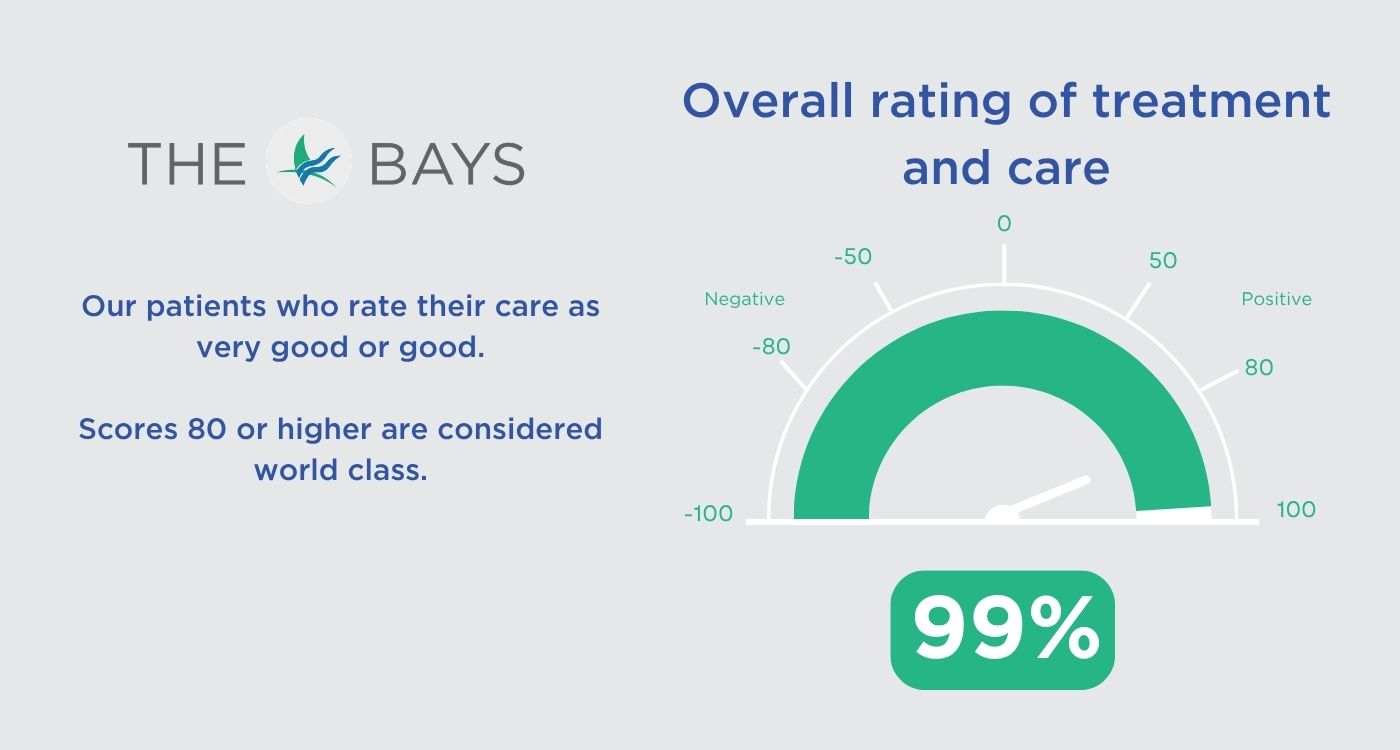
Clinical Governance
We are committed to safe, high-quality care supported by strong clinical governance. In line with Health Service Regulations, we have published our Clinical Governance Framework, which outlines how we monitor, manage, and improve clinical care across our hospital and dialysis unit.
Download the Clinical Governance Framework (PDF).
Falls prevention
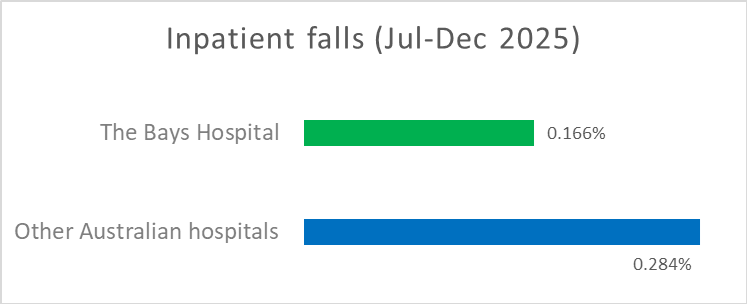
In hospital, injuries from falls are one of the leading causes of harm – and in some cases death – experienced in older Australians. At The Bays, we take falls seriously and work with you to prevent them.
When there is a fall, we investigate to identify learnings or opportunities for improvement to enhance the care we provide. These learnings are shared across the organisation to ensure that the care we provide is evidence-based, best practice and consistent.
We benchmark our falls performance against the Australian Commission on Safety and Quality in Healthcare’s Hospital Acquired Complications dataset.
We consistently perform better than the average rate reported by the Commission.
Pressure injuries
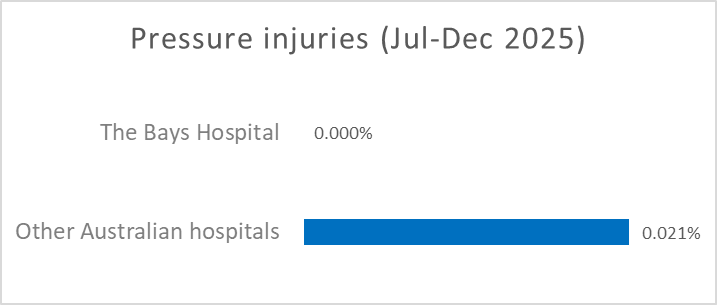
Pressure injuries are an international patient safety risk and can cause the patient severe pain, longer hospital length of stay and increased care needs when patients return home. A pressure injury may also be known as a bed sore or pressure ulcer. At The Bays, we strive to help keep you safe from pressure injuries.
We consistently perform better than the average rate reported by the Commission.
Patient safety
Access the results of our safety and quality assessments via the Safety in Healthcare website.
Your healthcare rights
To ensure you receive the best quality care it is important that you understand your rights.
Download a summary of your healthcare rights (PDF).
Your rights
The Bays Healthcare Group respects your right to participate in health care choices that affect you. As such you have a right to:
- Access, and receive, the best health care available.
- Be treated respectfully and with regard to personal dignity at all times.
- Be treated without discrimination in any form.
- Have your cultural and religious beliefs respected.
- Feel safe, clean and comfortable within the hospital environment.
- Be informed, prior to and during admission, about your treatment, investigations or operation and the alternatives available in terms you can understand.
- Be accurately and adequately informed about the hospital services available and the cost of your care and stay in hospital.
- Ask questions about your treatment and obtain a second opinion should you wish to do so.
- Give your informed consent for medical treatment; you also have the right to refuse treatment. You may also appoint someone to make medical decisions for you in the event you lose the capacity to do so.
- Participate in decisions made about your ongoing needs upon discharge and receive information about available services.
- Discharge yourself against your doctor’s advice, however, you will be asked to sign a form accepting responsibility for your decision.
- Be informed about the information that is collected about you and who has access to it.
- Have your personal privacy and the confidentiality of personal information, conversations and medical records maintained.
- Request access to your medical record, this will require completion of a form and a small fee will be charged. Requests should be made via the unit manager, hospital supervisor or health information manager. Access may be denied, but you have the right to contact the Health Services Commissioner for further advice.
- Know the identity, professional status and qualifications, and how to contact the staff involved in caring for you.
- Receive visitors and contact people outside the hospital during your stay.
- Access an accredited interpreter for essential information such as admission, and discussions about your medical history and treatment. Please inform your nurse or doctor as soon as possible if this service is required.
Your responsibilities
To assist hospital staff in providing you with the best possible health care, it is important that you take responsibility for:
- Understanding and keeping a record of your treatment and medications.
- Providing hospital staff with accurate and relevant information about your health, present treatment and circumstances that may influence your treatment, recovery or stay in hospital.
- Following your prescribed treatment.
- Informing the appropriate person if you are not able to keep an appointment.
- Telling hospital staff if you notice changes in your condition.
- Being considerate and respectful of staff and other patients and asking your visitors to be likewise.
- Accepting responsibility for your own health care and for the decisions you make about your own care and treatment.